
10. Fast Food Burgers and Pizza
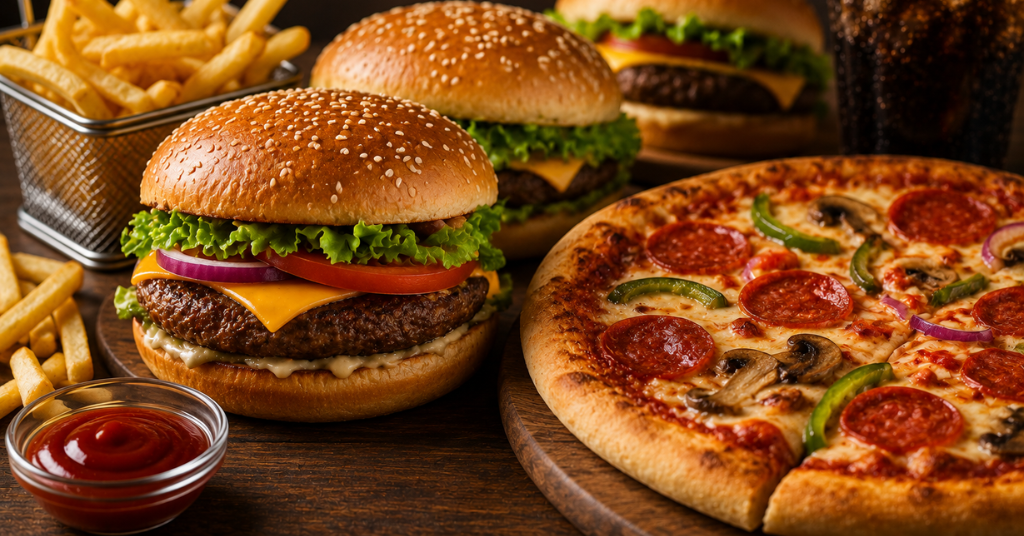
Fast-food burgers, pizza, and combo meals are convenient when you’re busy, but they can contain large amounts of calories, sodium, refined carbohydrates, and saturated fat. Eating them occasionally isn’t necessarily a problem, but frequent consumption can make healthy eating more difficult.
A typical fast-food meal can easily provide 800–1,500 calories, along with a substantial amount of sodium. Large portions, sugary drinks, and high-calorie sides can push the total even higher. After 50, when daily calorie needs may decrease, these meals can contribute to unwanted weight gain.
High-sodium and high-saturated-fat meals may also make it harder to manage blood pressure and cholesterol. Another concern is portion size. Restaurant meals are often much larger than the amount you would normally serve yourself at home, making overeating easy.
When possible, choose homemade alternatives such as whole-wheat pizza topped with vegetables, a grilled chicken burger on a whole-grain bun, or a vegetable-filled sandwich. Traditional home-cooked meals such as dal, sabzi, and roti can also provide a more balanced combination of protein, fiber, and nutrients.
If you do eat out, try the half-and-half rule. Order a smaller portion and fill about half your plate with salad or vegetables. This simple strategy can reduce your calorie and sodium intake while still allowing you to enjoy an occasional burger or pizza without feeling deprived.
10 Popular Foods to Avoid After 50 at a Glance
| Food | Why to Limit | Better Alternative |
| Sugary Drinks | High sugar and empty calories | Lemon water, coconut water |
| Processed Meat | High sodium and preservatives | Fresh chicken, fish, lentils |
| Fried Foods | Unhealthy fats | Grilled or baked foods |
| White Bread | Refined carbohydrates | Whole grain bread |
| Sweet Desserts | High sugar | Fresh fruits |
| Packaged Snacks | Salt and unhealthy fats | Nuts and roasted seeds |
| Instant Noodles | Sodium and preservatives | Vegetable soup |
| Alcohol | Liver and dehydration | Herbal tea |
| Full-Fat Dairy | Saturated fat | Low-fat dairy |
| Fast Food Burgers & Pizza | High calories and sodium | Homemade healthy meals |
A Healthier Way to Think About Food After 50
Instead of asking “What should I stop eating?”, ask “What can I replace it with?” Small changes are easier to follow than strict diets.
| Quick swaps: Simple replacements that add up over time |
| Soft drink ➜ Lemon water |
| White bread ➜ Whole-grain bread |
| Fried snacks ➜ Roasted snacks |
| Packaged chips ➜ Nuts and seeds |
| Instant noodles ➜ Vegetable soup |
| Ice cream every night ➜ Yogurt with fruit |
| Fast food meals ➜ Home-cooked balanced meals |
For many adults, improving just 2–3 habits consistently can have a bigger impact than trying to change everything at once.
Healthy Eating Tips After 50
- Eat plenty of fresh fruits and vegetables.
- Include lean protein in every meal.
- Choose whole grains instead of refined grains.
- Drink enough water throughout the day.
- Limit added sugar and excess salt.
- Stay physically active.
- Get enough calcium and vitamin D.
- Read nutrition labels before buying packaged foods.
- Cook more meals at home.
- Speak with your doctor or a registered dietitian if you have conditions such as diabetes, kidney disease, or heart disease.
Frequently Asked Questions (FAQs)
Is it necessary to completely avoid these foods after 50?
No. Most people can still enjoy these foods occasionally. The focus is on limiting them and choosing healthier options more often.
Which food is the worst after 50?
There isn’t one single “worst” food. Diets high in sugary drinks, heavily processed foods, and frequent fried foods are generally associated with poorer health outcomes.
Can I still eat sweets after 50?
Yes. Enjoy sweets in moderation and try healthier desserts such as fresh fruit or yogurt most of the time.
What should I eat after 50?
Focus on vegetables, fruits, whole grains, beans, lentils, lean proteins, healthy fats, and calcium-rich foods.
Should I consult a doctor before changing my diet?
Yes. If you have diabetes, heart disease, kidney disease, or other medical conditions, it’s best to discuss major dietary changes with your healthcare provider.
Also Check: 10 Popular Foods You Should Never Eat After 50
Conclusion
Turning 50 doesn’t mean giving up your favorite foods. It simply means making smarter choices that support your body’s changing needs. By reducing sugary drinks, processed meats, fried foods, refined grains, and other highly processed items, you can help protect your heart, maintain a healthy weight, and improve your overall well-being.
Healthy eating is not about being perfect. It’s about making better choices every day. Small improvements—like drinking more water, choosing whole grains, and eating more fresh fruits and vegetables—can have a lasting impact on your health.
Remember, the best diet is one that is balanced, enjoyable, and easy to maintain. Combine healthy eating with regular physical activity, good sleep, and routine medical check-ups to enjoy an active and fulfilling life after 50.