
9. Full-Fat Dairy Products
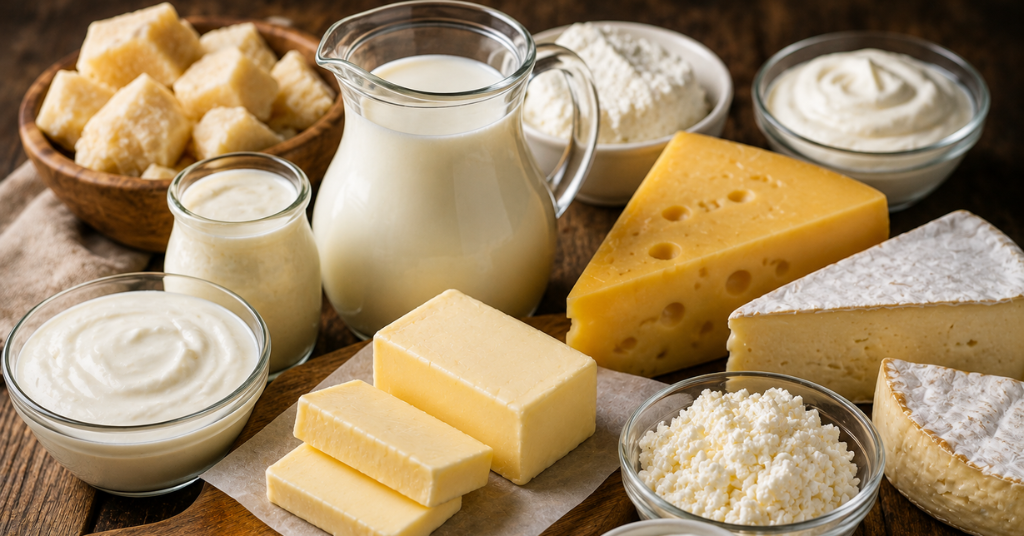
Dairy foods can be an excellent source of calcium and protein, both of which remain important after 50. However, some full-fat options, including heavy cream, butter, and certain cheeses, can contain significant amounts of saturated fat.
For some people, particularly those concerned about cholesterol or heart health, reducing saturated fat as part of an overall balanced diet may be beneficial. This doesn’t mean dairy needs to disappear from your meals—it simply means choosing your portions and varieties thoughtfully.
At the same time, it’s important not to overlook calcium and protein. Both nutrients play an important role in maintaining strong bones and muscles as you age. Cutting out dairy without replacing these nutrients can leave gaps in your diet.
Consider lower-fat choices such as low-fat milk, low-fat or Greek yogurt, reduced-fat cheese, or calcium-fortified plant-based milk if it suits your dietary needs. Greek yogurt can be particularly useful because it provides a convenient source of protein.
You don’t have to eliminate full-fat dairy completely. Instead, focus on portion control and choose lower-fat options more often. The goal is to create a balanced diet that supports heart, bone, and muscle health rather than unnecessarily restricting nutritious foods.