

In today’s competitive business world, companies cannot depend on guesswork. They need accurate numbers, clear reports, and smart planning. This is where an EPM system becomes very important.
An EPM system (Enterprise Performance Management system) helps businesses plan, track, and improve their financial and operational performance. It gives managers and business owners a clear picture of where the company stands and where it is going.
In this detailed guide, I will explain everything in simple language — including features, benefits, examples, real-life calculations, top vendors, and future trends.
What Does EPM Mean?
EPM stands for Enterprise Performance Management.
- Enterprise = The entire organization
- Performance = How well the company is doing
- Management = Planning and controlling activities
So, an EPM system is software that helps companies:
- Plan budgets
- Forecast future revenue
- Track financial performance
- Analyze profits and losses
- Make better decisions
It connects strategy with financial results.
Why Businesses Need an EPM System
Many companies still use spreadsheets like Excel for budgeting and forecasting. But spreadsheets create problems:
- Data errors
- Version confusion
- Manual calculations
- No real-time updates
An EPM system solves these problems by:
- Automating calculations
- Centralizing data
- Providing dashboards
- Improving accuracy
It helps companies move from “reactive” to “proactive” decision-making.
Core Functions of an EPM System
Let’s understand the main functions in simple terms.
1. Budgeting
Budgeting means planning income and expenses for a future period.
Example
Suppose a company expects:
- Sales revenue: $500,000
- Expenses: $350,000
Expected profit:
Profit=Revenue−Expenses
Profit=500,000−350,000=150,000
An EPM system automatically calculates this and tracks actual numbers later.
2. Forecasting
Forecasting means predicting future results based on current trends.
Example
If monthly sales are growing 5% every month:
Month 1: $100,000
Month 2: $105,000
Month 3: $110,250
Calculation:
NewSales=PreviousSales×(1+GrowthRate)
105,000=100,000×1.05
An EPM system automatically updates forecasts when new data comes in.
3. Financial Consolidation
Large companies have multiple departments or subsidiaries.
An EPM system combines all financial data into one report.
Example
- Branch A profit: $80,000
- Branch B profit: $120,000
- Branch C loss: $20,000
Total Profit:
80,000+120,000−20,000=180,000
Without EPM, this would require manual collection of data from each branch.
4. Performance Reporting
EPM systems create dashboards and reports showing:
- Revenue trends
- Cost analysis
- Profit margins
- Cash flow
Managers can see performance in real time.
5. Scenario Planning
This is one of the most powerful features.
It answers questions like:
- What if sales drop by 10%?
- What if costs increase by 15%?
- What if we hire 20 new employees?
Example
Current revenue: $1,000,000
If sales drop 10%:
1,000,000×0.90=900,000
The EPM system instantly shows impact on profit.
Key Benefits of an EPM System
1. Better Decision Making
Leaders get accurate numbers instead of assumptions.
2. Faster Budgeting
Manual budgeting may take 2–3 months.
With EPM, it may take just a few weeks.
3. Improved Accuracy
Automated formulas reduce human error.
4. Real-Time Data
Managers can track performance daily instead of monthly.
5. Stronger Financial Control
Companies can detect:
- Overspending
- Revenue decline
- Cash shortages
Before they become serious problems.
Real-Life Example of EPM in Action
Let’s say a manufacturing company has:
- Annual Revenue: $5,000,000
- Cost of Goods Sold: $3,000,000
- Operating Expenses: $1,200,000
Step 1: Calculate Gross Profit
GrossProfit=Revenue−COGS
5,000,000−3,000,000=2,000,000
Step 2: Calculate Net Profit
NetProfit=GrossProfit−OperatingExpenses
2,000,000−1,200,000=800,000
Now suppose raw material cost increases by 10%.
New COGS:
3,000,000×1.10=3,300,000
New Gross Profit:
5,000,000−3,300,000=1,700,000
New Net Profit:
1,700,000−1,200,000=500,000
Profit drops from $800,000 to $500,000.
An EPM system shows this impact instantly and helps management respond quickly.
Top EPM Software Vendors in the Market
Several companies provide strong EPM solutions. Here are some of the leading vendors:
1. Oracle
Offers Oracle EPM Cloud with strong financial planning tools.
2. SAP
Provides SAP Analytics Cloud and SAP BPC for enterprise planning.
3. Workday
Known for cloud-based financial planning and HR integration.
4. Anaplan
Focuses on connected planning across departments.
5. Prophix
Provides budgeting, forecasting, and reporting tools.
These vendors serve companies of different sizes — from mid-market businesses to large enterprises.
How to Choose the Right EPM System
Choosing the right system depends on your business size and needs.
Step 1: Define Your Goals
Ask:
- Do we need better budgeting?
- Do we struggle with reporting?
- Do we want automation?
Step 2: Check Integration
Ensure the EPM system connects with:
- ERP software
- CRM systems
- Accounting tools
Step 3: Evaluate Cost
Example:
If EPM software costs $50,000 per year
And it saves $100,000 in labor and error reduction
Return on Investment (ROI):
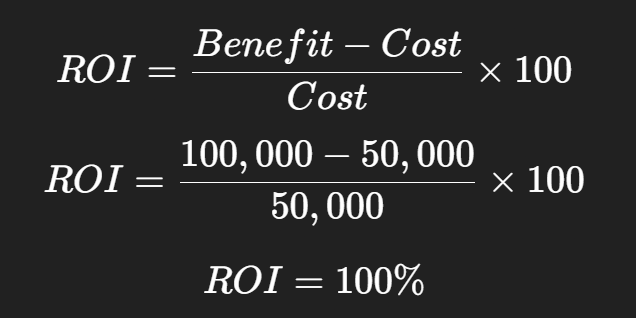
That means the investment doubles in value.
Common Challenges in EPM Implementation
Even though EPM systems are powerful, implementation can be challenging.
1. Data Quality Issues
If old data is incorrect, results will be inaccurate.
2. Employee Resistance
Some employees resist new technology.
3. High Initial Cost
Enterprise solutions can be expensive.
4. Training Requirements
Teams must learn how to use the system properly.
However, long-term benefits usually outweigh these challenges.
EPM vs ERP: What’s the Difference?
Many people confuse EPM with ERP.
| ERP | EPM |
| Records daily transactions | Analyzes performance |
| Focuses on operations | Focuses on planning |
| Manages inventory & payroll | Manages budgets & forecasts |
ERP tells you what happened.
EPM tells you why it happened and what will happen next.
Cloud vs On-Premise EPM
Cloud-Based EPM
- Lower upfront cost
- Automatic updates
- Remote access
On-Premise EPM
- More control
- Higher initial cost
- Internal maintenance required
Most modern businesses prefer cloud-based solutions.
Future Trends in EPM Systems
EPM systems are evolving rapidly.
1. Artificial Intelligence (AI)
AI can predict revenue trends based on historical data.
2. Automation
Routine reporting becomes fully automated.
3. Real-Time Analytics
Managers can track KPIs instantly.
4. Predictive Forecasting
Instead of static budgets, companies use rolling forecasts.
Example:
Instead of planning once per year, forecasts update every month.
Who Should Use an EPM System?
An EPM system is useful for:
- CFOs
- Financial analysts
- Business owners
- Corporate planners
- Large enterprises
- Growing mid-sized companies
Even startups can benefit as they scale.
Also Read: AICTE Internship: Complete Guide for Students
Final Thoughts
An EPM system is not just software. It is a strategic tool that helps businesses:
- Plan better
- Forecast accurately
- Improve profitability
- Reduce risks
- Make smart decisions
With automated calculations, real-time dashboards, and scenario modeling, companies gain full control over their financial performance.
In simple words:
If ERP tells you where you are,
EPM tells you where you should go.
As businesses face increasing competition and uncertainty, investing in the right EPM system can create long-term financial stability and growth.